Why machine-written social copy is so easy to spot, which habits we strip, and how OpenQuok Humanizer runs that catalog in Chrome or as a local fallback. Companion to our post on AI labels versus copy that still sounds canned.
Here you can find all published blog posts.
OpenQuok now schedules Dev.to articles with tags and series, tracks page views, reactions, and comments, and encrypts channel tokens at rest. Connect with a DEV API key, approve on the kanban, then publish from the dashboard, public API, or CLI.
TikTok and YouTube label realistic AI media. Reddit communities ban slop. Substack lets readers scan for AI text. OpenQuok Humanizer is a free, on-device rewrite so a social draft is easier for people to read — no account required to copy.
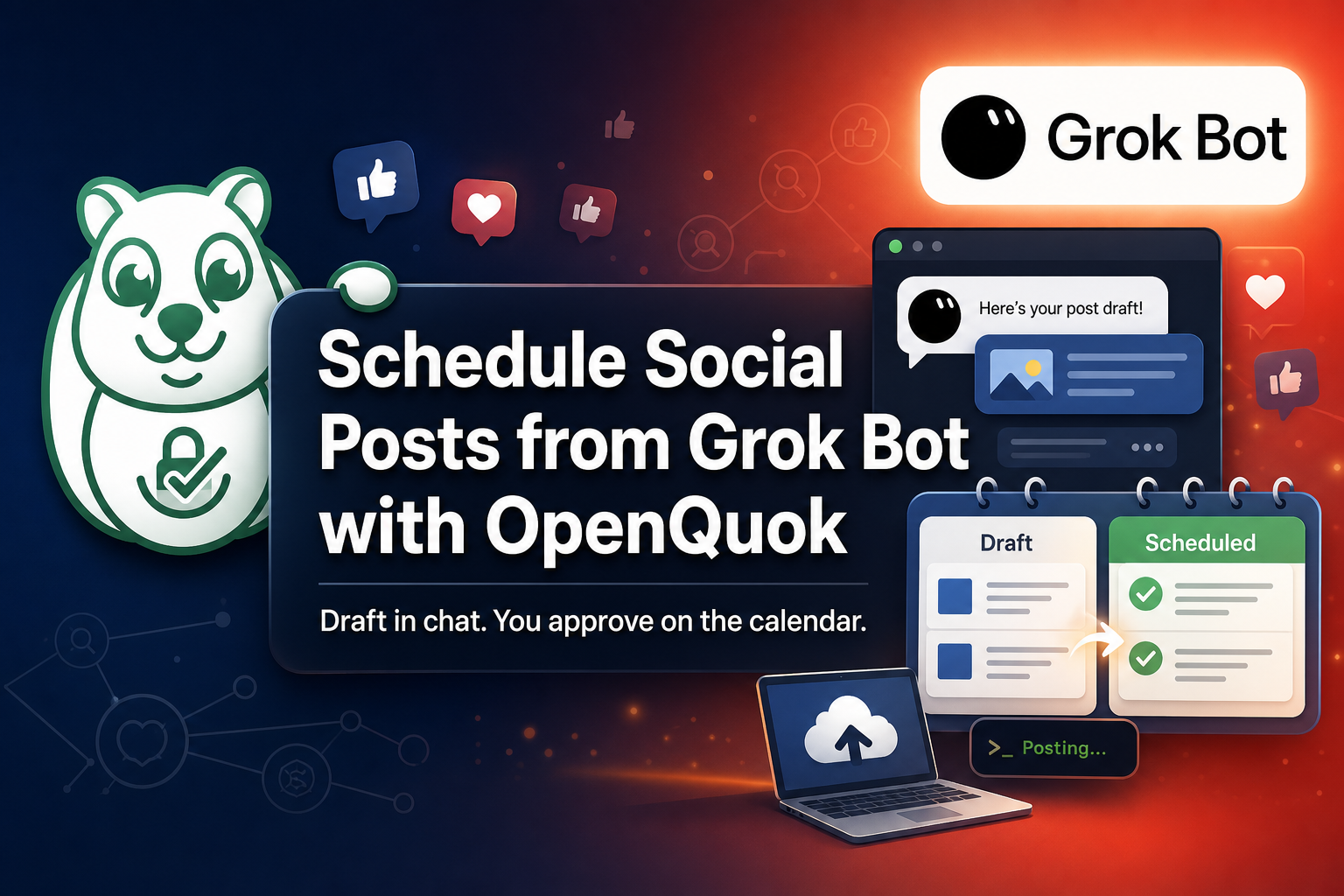
OpenQuok now ships as a Grok Bot skill: draft and queue posts from the Bot’s cloud computer, then approve on the kanban. CLI + skill stay the path; nothing publishes until you say so.
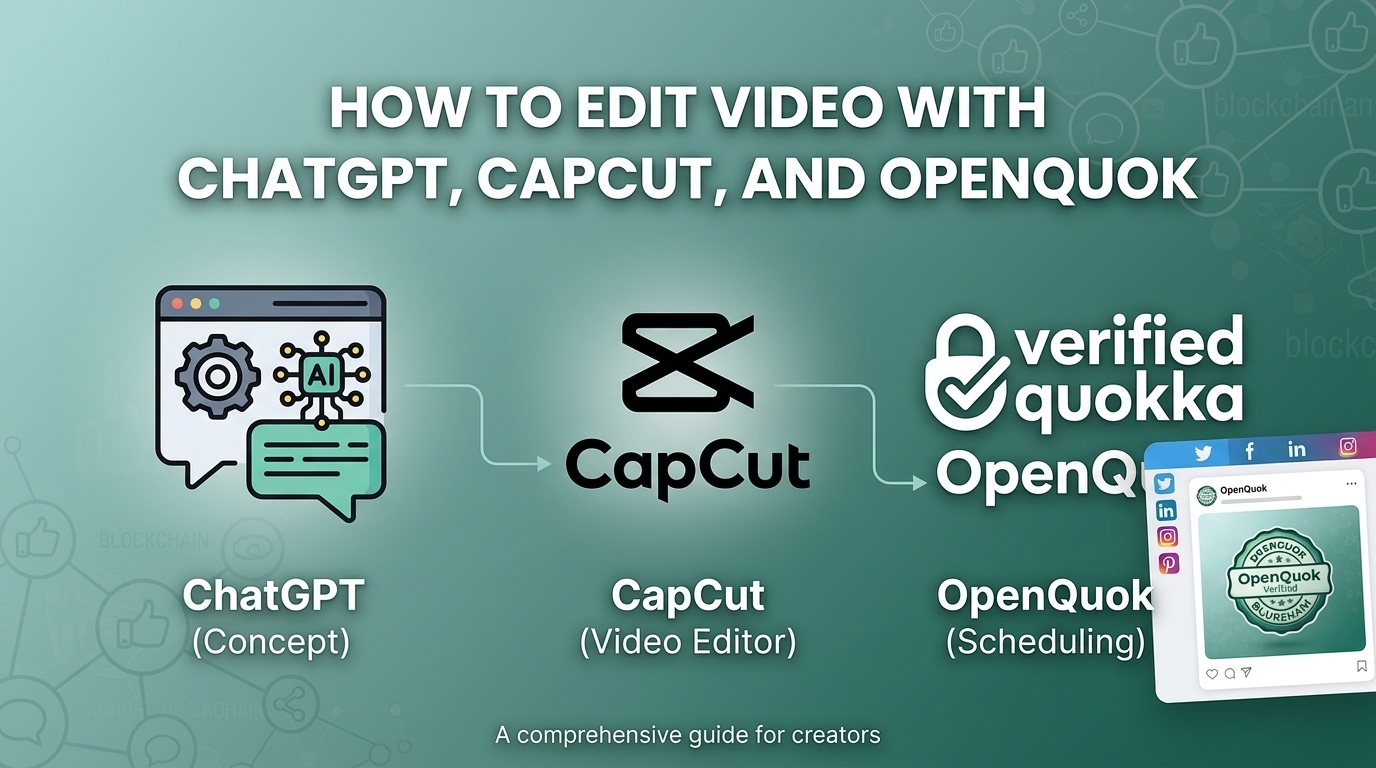
Brief in ChatGPT, edit the cut with CapCut CLI in Codex, then queue TikTok or Instagram drafts in OpenQuok MCP. Nothing goes live until you approve.
Self-host OpenQuok with Docker Compose, keep media on local disk, and authenticate the CLI with OAuth device login so OpenClaw and other agents never need a long-lived API key in env. Includes the services you run and a realistic monthly cost range.
Looking past Buffer when AI drafts pile up? See what G2 reviewers want from schedulers — multi-channel planning, client approval, clearer calendars — then compare Buffer vs OpenQuok.
A step-by-step guide to preparing your device, using a dedicated US VPN, warming up a new TikTok account, and scheduling consistent posts with OpenQuok so US viewers actually see your content.
Why we built OpenQuok - an open-source, agent-native social scheduler where AI handles volume and humans protect quality through review, workspace isolation, and analytics.